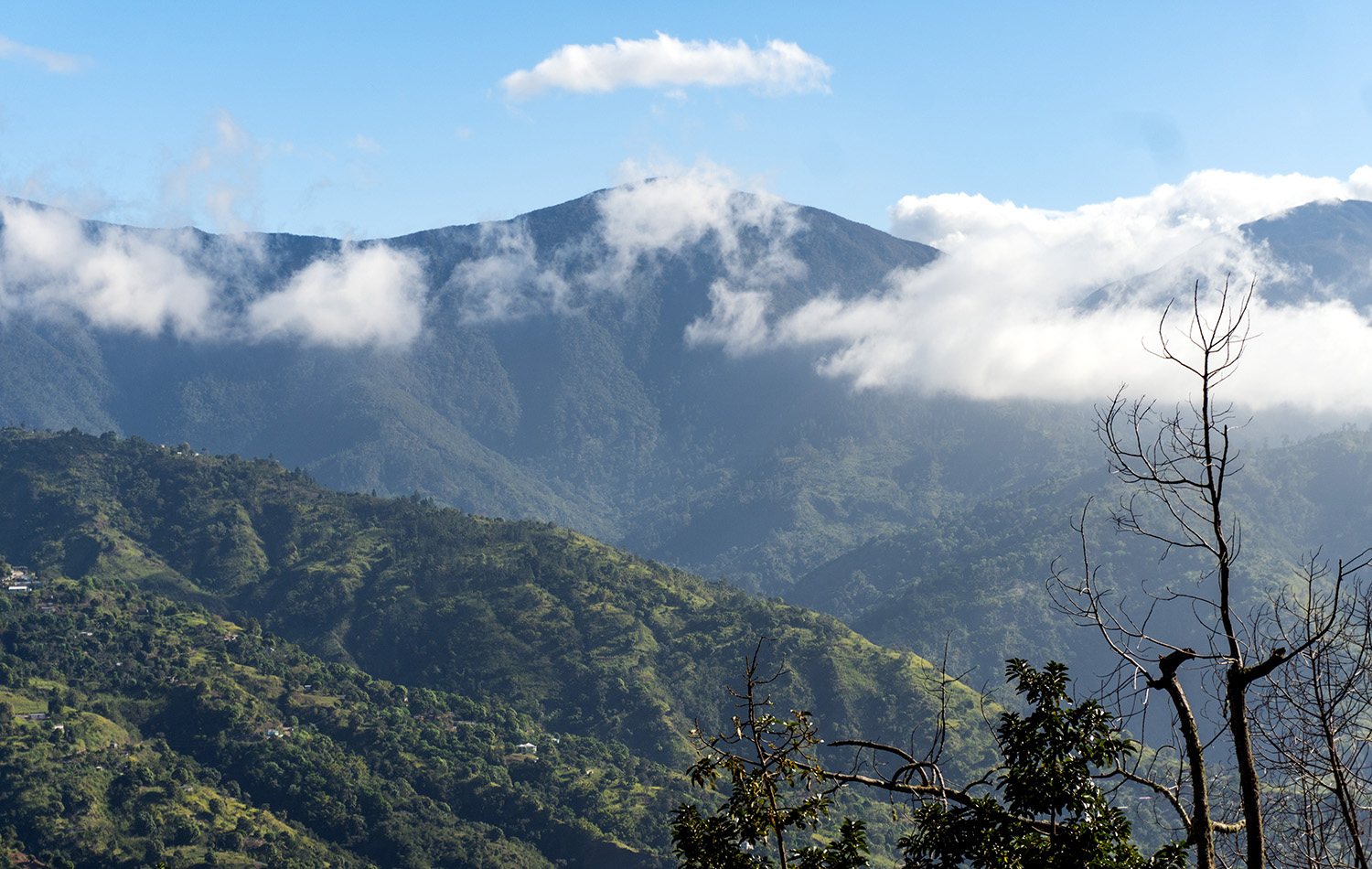
The Blue and John Crow Mountains is a network of mountains straddling the parishes of St. Andrew, St. Mary, Portland and St. Thomas. The hills and valleys in this region play host to several landmarks, flora and fauna that are significant to the natural history of Jamaica. Designated a national park in 1993, the Blue and John Crow mountains is the only national park in Jamaica. This designation provides legal protection to the area, designed to prevent harmful exploitation and promote sustainable engagement. For a natural get away, locals and tourists alike can follow in the footsteps of those who have gone before them through the cool rolling hills of the blue and john crow mountains national park where the land of wood and water meets the clouds of the Caribbean sky. Counting your luck along the way as you tick off the number of Jamaican endemics that you come across during your hike.
On your way to the peak, the blue mountain peak which stands 2,256m above sea level, you would want to be sure to keep an eye out for the black-billed swallow-tail hummingbird. Not to be confused with its red-billed counterpart, both are endemic to Jamaica, but the black-billed is an even more rare occurrence. It is found only in these eastern regions of the island. Other endemics that you might come across include the giant Jamaican swallowtail butterfly, the largest butterfly in the western hemisphere, the Jamaican tody and the Jamaican black bird.
The complex geography of the region was a natural refuge for people fleeing persecution and subjugation such as the Tanios and escaped slaves. These escaped enslaved people were the nucleus of a population that form communities such as Moore town, and Scott’s Hill maroon settlements. The difficult, untamed terrain was an asset to those who did not want to be found and a significant obstacle to those giving chase.
In 2015 the Blue and John crow mountains along with Port Royal was designated a UNESCO world heritage site. The only two such designations on the island.
